WELLOG
ARSENIC IN WELL WATER
What is Arsenic?
Arsenic is a natural
element that has had a long reputation for its toxicity. Simply stated, arsenic
is poisonous to humans and other animals. A one-time oral dose of 60 milligrams
of inorganic arsenic is considered fatal for most people. This amount is about
1/50 of the weight of a penny.
Drinking water having 10
micrograms per liter (10 parts per billion) or less of arsenic content is
considered acceptable.
Where does Arsenic come from?
Arsenic is found in many
areas of the world and is a relatively common element in many rock formations
within the earth. Arsenic is associated with certain mineralized areas and
shale formations. A geophysical gamma-ray log can yield information about the
layers of earth the well was drilled through and identify potential shale and
clay layers and their association with sandstone layers that are possible
aquifers.
Arsenic was at one time
used as a pesticide in agriculture. Shallow wells are more susceptible to
having arsenic contamination from prior agricultural operations. Deeper wells
often have layers of clay that protect the well from upper aquifer
contamination.
Arsenic is also
presently used to treat lumber which is probably not an issue for water wells.
How does Arsenic get into drinking
water?
Arsenic has the ability
to be dissolved into water, a process called leaching. Once arsenic is in
solution with water, it may be transported with the movement of water to a water well. People consuming water from a well that is
contaminated with arsenic may develop health problems. The Environmental
Protection Agency, World Health Organization and others have determined a
significant health risk exists when levels of arsenic in water exceed 10 parts
per billion (ppb), .010 milligrams per liter or 10 micrograms per liter.
What is the probability of Arsenic in
my well?
Practically every
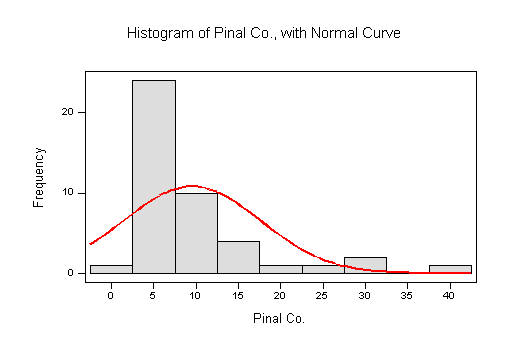
well has arsenic in the water. For example in 44 commercial water wells in Pinal County, Arizona, all 44 have
varying amounts of arsenic. The amounts vary from as low as 2 micrograms
per liter (2 ppb) to as high as 42 micrograms per liter (42 ppb) based on best estimates
from sample data given to EPA. The mean level of the 44 wells is 9.55 micrograms
per liter (9.55 ppb). The standard deviation is 8.00 which means
68 percent of the wells are between 5.55 ppb and 13.55 ppb.
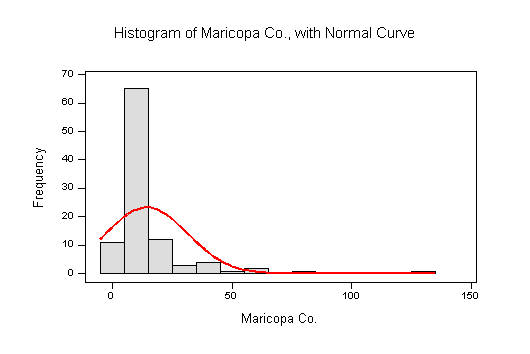
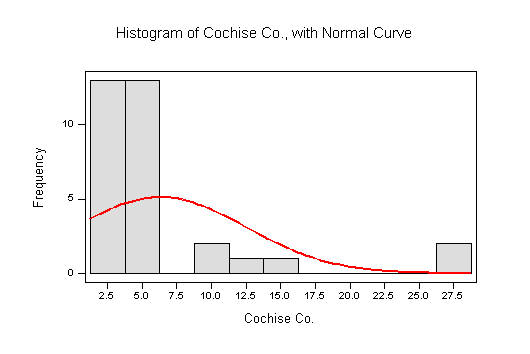
Compare with other counties in Arizona:
Maricopa County, Arizona
Cochise County, Arizona
Are there other sources of inorganic
Arsenic?
Food and water are the
primary sources of intake of inorganic arsenic. EPA estimates the average
dietary intake of arsenic per day is 14 micrograms above the amount consumed
from water. Considering an average intake of 2 liters of water per day for an adult, water would likely be the primary source of
arsenic. However, since the normal levels should be much lower, food is more
likely to be the primary source. Examples of foods likely to be high in arsenic
are uncooked rice, grape juice, flour and cooked spinach.
Should I test my well for Arsenic?
Arsenic occurs in most
water wells. The question is to what level. How much arsenic is in your water
well? Since arsenic has no taste or odor in water, the best way of finding out
is to collect a sample in an
approved, sealed water sample container. The next step is to have the
water analyzed at a certified testing laboratory. The cost of testing is
usually under $40.00. If no arsenic is detected, it isn’t usually necessary to
conduct further testing. If arsenic is detected at levels greater than 10
micrograms per liter, it is advisable to conduct a second test and not use the
water for drinking or cooking. Use an alternate source of water or install a
treatment system.
What are the methods used
to reduce arsenic levels in drinking water?
Depending on the amount
of arsenic that is in the water, a treatment system may or may not work with
enough efficiency to lower the level to safe level for drinking. It is
important to contact a reliable dealer that can properly install a treatment
system and establish a regular process to monitor arsenic levels. A
conventional water softener, chlorinator, or activated charcoal filter will not
remove arsenic.
Drill a new well
It may be necessary to
drill a new well. A new well drilled into a different water producing
zone may have reduced arsenic levels.
Connect to a public water system
Community water systems
will be required to maintain arsenic levels at or below 10 micrograms per liter
(10 ppb) beginning in January of 2006. These systems are tested on a routine
basis.
Buy bottled water
Bottled water is an
important alternative. Note: Bottled water is not regulated by EPA in
terms of arsenic. It is advisable therefore to ask your bottled water dealer
for information about their standards and testing for arsenic.
Revised 11-24-2018 © 2005-2018 WELLOG All Rights Reserved